Friday, October 23, 2009

Interview with Gerry Hunt


This week our ‘Five Questions with...’ features Gerry Hunt, writer and artist on Blood Upon the Rose: Easter 1916, the new graphic novel from O’Brien Press. Gerry is a retired architect, who took up creating graphic novels on his retirement, and has previously published In Dublin City and Streets of Dublin.

What are you working on at the moment?

I'm working on the comic I was drawing when O’Brien Press contacted me. It's a continuation of Streets of Dublin in which Johnny and his brother unearth some gold trinkets which Hughie pilfers thus bringing to life the Viking who was laid to rest with it. He is not a happy lad.

Who's the best new writer you've come across recently?

I haven't had a chance to check what is current for years but Frank Frazetta is my favourite artist and there is also Joe Coleman.

Do you have any peculiar rituals you do before you start writing?

I have to spend 20 minutes reading the sport on the daily to wake me up.

Do you have anything like a regular working day as a writer?

Yes, 3 hrs work before lunch and 4 hrs to whatever time it takes after. I work 6-7 days a week and I haven't had a holiday for years.

Who's your favourite literary character?

Bart Simpson. When I see that guy and I think of the elderly lady that does the voice I crack up.

If you could be anything else in the world, except a writer, what would it be?

I would go straight back to Architecture.

[Padraig]

Gerry will be signing copies of Blood Upon the Rose in Chapters Bookstore on Saturday 24th October at 3pm.

Saturday, October 17, 2009

Friday, September 25, 2009

Interview with Dacre Stoker


On Wednesday 30th of September at 2.30pm we are delighted to have Dacre Stoker, great-grandnephew of Bram Stoker, in Chapters to sign copies of his book Dracula: The Un-Dead, the first official sequel to Dracula itself. I took this opportunity to ask him a few questions about himself and the book.

Pádraig Ó Méalóid: What is Dracula: the Un-Dead about?

Dacre Stoker: Dracula: the Un-Dead is our way of reconnecting with original Dracula fans. We have picked up the story 25 years after Bram's novel ends. We have tried as best we can to utilize Bram's original characters in a similar manner as Bram would have with appropriate modernization.

From our website:


Written with the blessing and cooperation of Stoker family members, Dracula The Un-Dead begins in 1912, twenty-five years after Dracula "crumbled into dust." Van Helsing's protégé, Dr. Jack Seward, is now a disgraced morphine addict obsessed with stamping out evil across Europe. Meanwhile, an unknowing Quincey Harker, the grown son of Jonathan and Mina, leaves law school for the London stage, only to stumble upon the troubled production of "Dracula," directed and produced by Bram Stoker himself.

The play plunges Quincey into the world of his parents' terrible secrets, but before he can confront them he experiences evil in a way he had never imagined. One by one, the band of heroes that defeated Dracula a quarter-century ago is being hunted down. Could it be that Dracula somehow survived their attack and is seeking revenge? Or is there another force at work whose relentless purpose is to destroy anything and anyone associated with Dracula?


PÓM: Am I right in thinking that Dacre is an old Stoker family name? And how should we be pronouncing it?

DS: That is easy, Dacre is an old Stoker family name. I am named after a famous Irish cousin, who was my god father: Commander H H G Dacre Stoker, the first submariner to take his sub AE2 up the Dardanelles in WW1. It was fateful as it happened during the ill-fated campaign of Gallipoli. Once in the Sea of Marmara, the tiny sub was attacked and crippled, and instead of being taken by the enemy, the crew scuttled the sub, and were captured. Many more interesting Stories about H H G Dacre Stoker exist; Irish Croquet champion at age seventy-seven etc etc!

To remember the pronunciation, try ‘Acre’ like an acre of land and put a D in front. Or Day-Ker.

PÓM: Did you have to do a lot of research for the book?

DS: The research for the book was done in a few different ways. I personally went to the Rosnebach Museum in Philadelphia with my wife and spent a day carefully reading through all of Bram's hand written research notes that he compiled for writing Dracula. We were looking for things that he had known about and maybe intended to use in Dracula but were left out for some reason. This helped us decide upon the use of Inspector Cotford as a character in our book. Ian Holt and I also hired Alexander Galant, to do research into street maps, and other important details pertaining to historical accuracy of the period.

PÓM: Have you had the usual list of strange jobs that authors always seem to have had?

DS: I have been a school teacher and athletics coach for most of my life. Since I then I owned and managed an outdoor clothing and gear shop for 4 years. Presently I am the director of a land conservation organization, I also teach CPR, First Aid, and Blood-borne pathogens.

PÓM: Is there any interest in filming the book, or is it too early to say?

DS: That is something we are involved in at the moment, we have two routes to go, the independent and studio route. Right now we have significant interest from a few studios and a group putting together financing for an independent project.

PÓM: Dacre Stoker, thank you very much for your time.


[Pádraig]

Thursday, September 17, 2009

5 Questions with... Juliet E McKenna


This week, our ‘Five Questions with...’ features British writer Juliet E McKenna, author of the fantasy series The Tales of Einarinn and The Aldabreshin Compass, and no stranger to us here in Chapters, due to her regular visits to Dublin-based SF Conventions. We always have a ready supply of signed copies of Juliet’s books on our shelves!

1. What are you working on at the moment?

I’m putting the final touches to Banners in the Wind, the concluding book of the Chronicles of the Lescari Revolution trilogy. Those exiles and rebels who decided it was time to put an end to their quarreling dukes’ tyranny in Irons in the Fire are dealing with no end of unforeseen consequences after taking the battle to their enemies in Blood in the Water – and I’m expecting the page proofs of that book any day too.

Since I deliver the Banners manuscript in October, I’m already thinking ahead to some other projects that could take me in interesting new directions.

2. Who's the best new writer you've come across recently?

New to me personally or new to publishing? If it’s the former, I’m loving Andrea Camilleri’s Inspector Montalbano detective novels, set in Sicily. As for debut novels, Kari Sperring’s Living with Ghosts is a fantastic read, showing just how far from formulaic fantasy fiction can be these days.

3. Do you have any peculiar rituals you do before you start writing?

Not that I’m aware of. On a typical morning, I’ll wave the teenage sons off to school and make a cup of tea while ignoring any outstanding housework or washing up. That can wait till the lads get home and do their share. Then I head upstairs to my study. Dealing with email limbers up my typing fingers, and then I’m off into the current chapter.

4. Who's your favourite literary character?

How am I supposed to answer that? I’ve been reading books by the shelf-full for the past forty years! I can’t even decide on a favourite among my own characters, never mind anyone else’s. If you really must have an answer? At the moment, Sam Gamgee from The Lord of the Rings; loyal, brave, whose heroism comes from innate strengths, never mind external appearances. Ask me again next month and it may well be someone entirely different, depending on what I’m reading or thinking. Like, say, Steven Maturin. Oh, or Elvis Cole. Or…

5. If you could be anything else in the world, except a writer, what would it be?

That’s an interesting one. If my life hadn’t taken the turn that ended up with me being a writer, I’d most likely be a Personnel Director by now, and I reckon I’d still enjoy that kind of work.

But anything else in the world? I would be an actor; middling-successful, please, so doing a bit of film work to take me to exotic places, some quality telly so I’d meet the great Sir and Dame thespians and observe their skills, interspersed with the different challenges and thrills of live theatre every few seasons. But without all that paparazzi nonsense, thanks.

[Pádraig]

Friday, September 11, 2009

"Of what import are brief, nameless lives... to Galactus?"


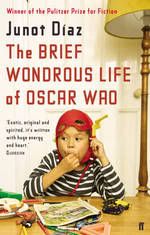
The Brief Wondrous Life of Oscar Wao

I fell in love with Junot Díaz after the first few minutes reading this book. Simple as that. I actually ran to get his collection of short-stories, that's how much in awe of his writing I was.

And why was that?

It's, in a word, fresh. A mix of street-hardened spanglish (not bastardized, mind you, just an abundance of Latin-American Spanish expressions) with nerdcore galore (it's not every book that manages to compare Trujillo with Darkseid, I'll tell you that much!), it just leaps from the page, at times sounding like something that shouldn't be read but lived, if that makes sense.

The main character (for this book deals not only with Oscar but with his family and his people) is, well, a big fat nerd. No two ways around it, Oscar is a gamer, a comic book nerd, a sci-fi geek that simply does not function well within the real world.

And don't we all know someone like that (trust me, I used to work in a comic book shop)?

We are swept in by his family, his problematic sister, his larger than life mother, the saintly grannie (you might call it a cliche, but heck, she reminds me of my grandmother, it's a very Latin trait in a way!), his quasi-brother-in-law but, in the background (the soul of the book itself), there are always the Dominicanos. Their culture, their history, their curses.Díaz makes a point of filling you in on episodes of the Trujillato so that you'll have an idea of how the Dominican soul was broken and how it still affects its descendants to this day, even when they ran away to far off Nueva York.Fukú weights heavily in Oscar and Lola's shoulders. And there's no running away from curses.

This book is undoubtedly a joy to read, although I wonder how other readers will take its usage of Spanish slang and the many, many, MANY nerd references* that more than temper the book marinate it.

A worthy Pulitzer Prize for Fiction winner and a solid 5 stars for me!

*And "Grodd" is spelt with two Ds, Díaz, TWO Ds!!

[Bruno]

Wednesday, September 9, 2009

Sumo by Helmut Newton


To celebrate the 10th anniversary of the publication of SUMO by Hemut Newton Taschen have published a new edition of this record breaking book.

Originally published in an edition of 10,000 signed and numbered copies, it quickly sold out despite its €7500 price tag. The book which weighed in at a massive 35.4 Kilos came with its own display stand designed by Philippe Stark. In 2000 the book broke the record for the most expensive book published in the 20th century, when Sumo copy number one, which was autographed by over 100 of the book’s featured celebrities, sold at auction in Berlin for €320,000.

This new edition, while smaller in dimensions and weight is still a big book, and features over 400 pictures covering every aspect of Helmut Newton’s career from his fashion photographs to his nudes and celebrity portraits. A must have for all art and photography fans the book comes with its own display stand and a special “Making of” Booklet and is much more affordable than the original edition

Sumo by Helmut Newton

Published by Taschen

Available in store, priced at €124.99.

Tuesday, September 8, 2009

Preview - The Left Hand of God


We wouldn’t normally do this, but I’ve just read a proof for Paul Hoffman’s forthcoming fantasy debut The Left Hand of God, due in January 2010 and a word is definitely required. All things being equal this new piece of “imaginative fiction” should prove to be one of next years big titles on the fantasy market and probably the cross-over market as well. International rights sold in a heartbeat after it appeared at the Frankfurt book fair and Penguin Michael Joseph are planning to heavily market what they consider to be a very important new author.

Being touted as a blend of Umberto Eco’s The Name of the Rose and Harry Potter, the novel follows the adventures of Thomas Cale, a Redeemer Acolyte raised from toodlerhood in a sort of brutal preparatory academy for fanatical warrior priests. I’m not going to give a single plot point away but trust me; this is riveting stuff, artfully crafted and a joy to read. It grabbed me from the first page and it’s incredibly well developed world and dark sheen of danger, adventure and intrigue kept me hanging on until the end.

So be sure that come January next year you get your hands on what might well prove to be the biggest new name in fantasy.

[Rob]

Monday, September 7, 2009

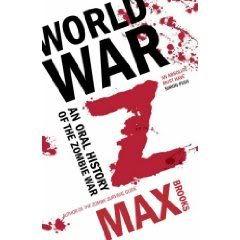
World War Z


It does seem like Zombiemania has taken over the bookstores, but amongst all the new offerings, lets not forget what its probably the best zombie book ever written (sure, in MY opinion, but hey).

World War Z, by Max Brooks (Mel Brooks son, for those cinematically inclined) is an oral history of the zombie war, in which Max takes it upon himself to chronicle the events that lead to the war with the undead, the desperate battles and the aftermath of the biggest threat Mankind ever faced.
And it is simply one of the best, tensest, smartest and most humane books Ive ever read.
Composed of interviews with key-pieces of the action or sometimes just unlucky people that happened to be at the wrong place at the wrong time, its breathtakingly detailed and vivid and, clich as it sounds, you will feel like you were there.
World War Z Audiobook
And that is even more impacting in the audiobook version, even in its abridged form. Now bear in mind that I'm not one for audiobooks since I have the attention span of a gnat and I forget everything in 5 seconds, but when the characters are being played by actors like Alan Alda, Carl Reiner, Jurgen Prochnow, Mark Hamill, John Turturro or Henry Rollins you WILL sit up and take notice.

Both versions are incredible and absolutely essential, not just for zombie fans but also for fans of good books, simple as that.
World War Z and World War Z Audiobook are currently in stock and waiting for you to take them home.
[Bruno]

Thursday, September 3, 2009

5 Questions with... Suzanne McLeod


This week, our ‘Five Questions with...’ features British writer Suzanne McLeod, author of the Spellcrackers.com series of urban fantasy books, which so far includes The Sweet Scent of Blood and The Cold Kiss of Death. Besides her website, Suzanne also regularly writes on her blog.

1: What are you working on at the moment?

I’m working on The Bitter Seed of Magic, Book 3 in my Spellcrackers.com urban fantasy series. Genny Taylor, the main character, has got an eighty-year-old curse to crack; a couple of relatives who turn up and present her with a challenging (and blood-splattered) problem; and at least one murder to solve. My books are set in London, and some of the most fun I have when writing (apart from devising interesting, magical ways to kill people, and putting my characters in difficult and horrific situations) is choosing which parts of the city to set my stories in. Of course, then I have to have a day out in London to do the research – my next trip will be to the Tower of London, with maybe a detour via the shops... It’s a hard life being a writer sometimes :- ).

2: Who’s the best new writer you’ve come across recently?

Sadly, I’m not reading a lot of new authors just now, as most of my free time is given over to my own writing. And when I do read, I tend to choose authors I love and am familiar with – I have quite a long list – and catch up with their newest books. But the one book which hooked me recently is The Hunger Games by Suzanne Collins. By about two thirds of the way in, I ended up desperate to know how the main character was going to get out of the problem she was in. I’m eagerly waiting to find out what happens next in Catching Fire.

3: Do you have any peculiar rituals you do before you start writing?

I make a cup of tea, bow down before the writing gods and ask for inspiration, and plug my brain directly into the computer... OK, no just kidding. I do start with a cup of tea, then I have a tweak and edit of the previous session’s writing to get me back into the story, and then slowly make more words. I work either on the computer or the laptop, depending on where I am – I’ve written on trains and in airports from necessity – but I prefer to do most of my writing at home, where it’s quiet, and the kettle’s handy for more cups of tea. But if anyone knows where I can get that direct brain/computer link, please get in touch.

4: Who’s your favourite literary character?

I think it’s a close call between Bram Stoker’s Dracula (as if you couldn’t guess that from someone who writes about vampires) and the Phouka – a shapeshifting faerie – from Emma Bull’s War for the Oaks. He’s a wonderful character full of contradictions and internal conflicts who grows and changes along with a great fantasy story.

5: If you could be anything else in the world, besides a writer, what would it be?

I’d love to be able to play the saxophone and sing. Unfortunately, I never got to grips with music, and I can’t carry a tune. Luckily for everyone else, I know it, so no one will ever be subjected to my – really embarrassing – musical attempts.

[Pádraig]

Thursday, August 27, 2009

5 Questions with... Sarah Rees Brennan


This week, our ‘Five Questions with...’ features Sarah Rees Brennan, a young Irish writer whose first book, The Demon's Lexicon, was published this summer. You might also like to have a look at Sarah’s blog on LiveJournal, called Sarah Tells Tales.

1. What are you working on at the moment?

I'm working on the third book in my Demon's Lexicon trilogy, The Demon's Talisman, and a romantic comedy I'm co-writing with a friend. Working on two things at once is always interesting - you find yourself accidentally inserting demons into the comedy, and lovers' squabbles into the sword fights, and then realising you really need your morning caffeine injection.

2. Who's the best new writer you've come across recently?

I would have to pick two - Margi Stohl and Kami Garcia wrote Beautiful Creatures, a gothic-to-modern romance set in the deep South which isn't out yet, but which I really enjoyed. I was particularly seduced by the exotic food, though of course being Irish, 'gravy and biscuits' immediately makes me think of someone upending a gravy boat over a packet of Rich Tea digestives.

3. Do you have any peculiar rituals you do before you start writing?

Aside from the ritual goat sacrifice? Heh, no: I tend to check my email, drink three cups of tea, and go to writer town. Some people might consider my continuous listening to country music as a peculiar ritual, though... My flatmates have certainly expressed that opinion.

4. Who's your favourite literary character?

Elizabeth Bennet from Pride and Prejudice. I love her! She's funny and flawed, attractive without ever being the best-looking in the room and without ever minding that she's not the best-looking girl in the room, and really just impossible not to love. I wish I knew how Jane Austen did that!

5. If you could be anything else in the world, except a writer, what would it be?

I think I would be the possessor of an incredibly sophisticated robot suit, which enabled me to fight crime without ever risking being harmed. (I would have lasers in my robot arms, and a comfy chair and kettle inside the suit.) Failing that, there are the options of working in a bookshop, being queen, and being the Official Taster for all the chocolate factories in the world...

[Pádraig]

Friday, August 21, 2009

Graphic Novel, is it?


The Graphic Novel is the fastest growing literary form, but there has been mixed opinions about the term since it was first used in 1977 by Will Eisner to describe his A Contract with God. So, curious to see how the professionals felt about it, I asked sixteen assorted comics writers, artists, and publishers the same question: What's your opinion of the term 'Graphic Novel'?

Neil Gaiman said:

It is at moments like this Pádraig, that we remember what Dr Johnson said on the subject:

As far as I can tell, GRAPHIC NOVEL was a term coined by YAHOOS specifically to pester, irritate and lykewise get the GANDER of MASTER EDDIE CAMPBELL, such that SMALL BOYS and STREET URCHINS are said to shout it at him in the street (Viz,
Here Comes Master Campbell, Have you written or drawn another Graphic Novel today?). Persons of QUALITY do not utter it, preferring such terms as BIG COMICAL BOOK ALL BOUNDEN TOGETHER WITH A THICK SPINE or even A COLLEXION OF PAGES WITH PICTURES AND WORDS PRINTED IN SUCH A WAY THAT BOOKESHOPPES CAN SELL THEM TO THEIR PROFIT.

Other, more serious, opinions can be found in this blogpost, from people like Bryan Talbot, David Lloyd, and Dave McKean.

[Padraig]

Thursday, August 20, 2009

5 Questions with... Abigail Rieley


This week, our ‘5 Questions with...’ features Irish writer and journalist Abigail Rieley, whose first book, Devil in the Red Dress, told the true story of the Sharon Collins ‘Lying Eyes’ Hitman-for-Hire case.

1. What are you working on at the moment?

I'm currently in the final editing stages of my first novel. It's a bit of a change from my previous book Devil in the Red Dress, which came out of my work as a court reporter. This book is a satirical fantasy. OK there might be one or two journos in it but after that it all gets a lot more surreal.

2. Who's the best new writer you've come across recently?

Without a doubt Sam Savage. I read Firmin: Adventures of a Metropolitan Lowlife on the train to and from a sentencing in Galway. It's a wonderful book - funny, tragic and utterly compelling. A book in which the main character is a rat which is also a profound celebration of the richness reading can bring to life. Well, it's one of those books I read and really wish I'd had the idea first!

3. Do you have any peculiar rituals you do before you start writing?

At the risk of sounding boring it's putting coffee on to brew. I discovered a long time ago that caffeinated coffee was a severely bad idea when I was writing. I can easily get through an entire pot in a day and if it's a leaded brew, after a few cups I can't concentrate to the end of a sentence! I'm pretty obsessive about my decaff beans - if I'm having a hard time getting started just the smell of the coffee brewing gets me back on track. I have a hazelnut blend I'm eking out for as long as I can - the place where I used to get them was a casualty of the recession.

I also listen to music when I write. I'm too used to the clatter of newsrooms to work in absolute silence. I have playlists for each of my characters. It helps, when I'm working on a difficult scene, to have the soundtrack for their lives not mine.

4. Who's your favourite literary character?

Since I was a kid I've been a fan of dystopian fiction - possibly something to do with a 70s London childhood. Aldous Huxley's Brave New World was always a favourite and Helmholtz Watson is my favourite character. I always found him more interesting than the other leading men. He's principled but pragmatic and passionate about freedom of thought...although I'm not sure I'd go to the lengths he does at the end of the novel when it comes to finding a quiet place to work.

5. If you could be anything else in the world, except a writer, what would it be?

I've wanted to be a writer for as long as I can remember so this is a really hard one. I did flirt with the idea of being a Womble for a while when I was about 5 and living in Wimbledon but I think nowadays if I couldn't write I'd have to get my fix vicariously by running a bookshop.


[Padraig]

Tuesday, August 18, 2009

Books do furnish a room: Elementary, my dear Reader


Though we're a bookish lot, we're pretty excited by the forthcoming Guy Ritchie film adaptation of Sherlock Holmes. Created by Arthur Conan Doyle, Holmes and his loyal companion Dr Watson have seen countless outings in various book jackets since their appearance in Strand magazine in 1891, and Caustic Cover Critic tackles the various incarnations of the brilliant "consulting detective".

Included are Michael Kirkham's tasteful pipe and swirls of smoke for White's (see also) Vintage Classics's handsome hardcover edition, as well as Atlantic Crime Classics retro patterned jacket. Hats off, though, to Hard Case Crime's "lurid pulp drag" dime store cover that has startled the broadsheets. Says publisher Charles Ardai,
"This is the tradition we wanted to revive with our edition of The Valley of Fear – presenting something 'good for you' in 'bad for you' garb," he said. "We chose Conan Doyle precisely because he does seem miles away from what we usually do – part of the goal was to startle readers with the apparent disconnect between the style of the art and the work being presented."

Our personal favourites are Coralie Bickford-Smith's acidic, Hammer horror-style covers for Penguin Reds, and available in-store. Created with Mike Topping, you can read both artists talking about the series here.

[ST]

Monday, August 17, 2009

A room of one's own

Writers are generally solitary creatures, spending most of their time alone in a room, decanting the products of their fertile imaginations into computers, and from there to the printed page. Their rooms are their places of power, shaped to meet their needs, so any glimpse into a writer's room seems like a glimpse into a part of their creativity.

The Guardian have been running a feature called Writers' Rooms since the beginning of 2007, with individual writers talking about where they write, accompanied by a photograph. Here's award-winning Irish writer Sebastian Barry's piece, along with this photograph:

SebastianBarry

"It doesn't look very tidy, but from childhood I have loved provisionality in a room, something thrown together, as indeed the bookcase on the right was, in the first days after coming here 10 years ago. ... The plain inkwell I dug up in the garden, which seemed an apt thing to find. There's stuff in boxes waiting to go off to the Harry Ransom Center in Texas sometime. The chair was sold to Ali years ago in a Dublin shop. The man swore it was "genuine Georgeen" and it may well be."

Meanwhile, photographer and Who Killed Amanda Palmer? contributor Kyle Cassidy has been taking photographs of Fantasy & Science Fiction writers in their workplaces for a forthcoming book called Where I Write: Fantasy & Science Fiction Authors in Their Creative Spaces. You can see some of the photographs here, including this bird's-eye view of Samuel R Delany:


Given the choice between the two, I'd have to say I much prefer to see the writer in the photograph, rather than not. It's the writer who gives the room its meaning and purpose, after all.

[Padraig]

Thursday, August 13, 2009

The Recommendation


Once in a while - interspersed with shelving and pricing, stock checking and reordering, title searches and tidying - a bookseller gets to perform one of his/her primary, and all too often neglected, functions: the Recommendation. Oh yes, the capital 'R' is most certainly warranted. In today's book market the range of titles is staggering and when you walk into a bookstore, particularly one as capacious as Chapters, the task of finding something to take home can be daunting for even the most determined bookworm.

To some greenhorns the hopeful, beaming visage of a customer in need can be a source of great apprehension. “What if they don't like the book I recommend”, one thinks. “What if they never come back, because I promised them a nerve shredding page turner and they fall asleep on page 24?” And so forth. For some of us, however, recommending a book can be one of the most rewarding parts of the job. There is little to compare with knowing that you've gotten the right book for the right reader, and getting positive feedback always makes the day that little bit better.

Of course the internet has made it that much easier to find that book you heard about last week in the café, or read in the Guardian Review but forgot to take the clipping, but in a world of Amazon auto-suggestions and keystroke targeted online marketing there is no substitute for looking someone in the eye, asking the right questions and guiding them to the book that's been sitting on that shelf, quietly and patiently waiting for them to pick it up. So don't be shy, if you're ever in need of some inspiration, a new direction for your reading or even just someone to tell how awful that last book you read was, talk to us. It's what we're here for.


[Rob]

Wednesday, August 12, 2009

Books do furnish a room: Objects of desire


It was the book that caused a scandal, with one reviewer calling it 'sheer, unrestrained pornography'. The book, Nabokov's Lolita; the publisher, George Weidenfeld. And who could resist a copy of Lolita with a pair of cherries cut into the cover? Weidenfeld & Nicolson hope you can't: to celebrate their 60th anniversary, they've issued some dashing looking books, Lolita included.

Pitched as a covetable, tactile collection, each book cover is designed with a "window" (also known as die-cut) on the front revealing a portion of specially commissioned endpapers, reflecting each novel's theme (hence cherries for Lolita). It's a nine-strong list that includes Vikram Seth's A Suitable Boy, designed by Yehrin Tong, as well as J.G. Farrell's Siege of Krishnapur, with endpapers by Mikko Rantanen.

The set is limited, so you should get yours while our stocks last. The list in full:
Lolita by Vladimir Nabokov, designed by Louisa Scarlet Gray

One Day in the Life of Ivan Denisovich by Aleksandr Solzhenitsyn, designed by James Dawe

The World According to Garp by John Irving, designed by Karl Grandin

The Siege Of Krishnapur by J.G. Farrell, designed by Mikko Rantanen

The Color Purple by Alice Walker, designed by Carl Kleiner

Sophie's World by Jostein Gaarder, designed by Mikko Rantanen

A Suitable Boy by Vikram Seth, designed by Yehrin Tong

The Reader by Bernard Schlink, designed by Ann Muir Marbling

The Shadow Of The Wind by Carlos Ruiz Zafon, designed by Micah Lidberg


[ST]

Tuesday, August 11, 2009

5 Questions with...Juliet Bressan


This week, our 'Five Questions with...' features Irish novelist Juliet Bressan, whose new novel Entanglement we're launching here in Chapters on Thursday 13th August. Entanglement is Juliet's second novel, following last year's Snow White Turtle Doves.

1. What are you working on at the moment?

I'm finishing up my third novel and I suppose you'd call it a romantic political thriller... It's the story of a Dublin A&E doctor who discovers that her boyfriend has murdered one of the patients... This book is taking me a bit longer than the others because I've had to do a lot of research. So I've been spending the summer reading forensic pathology books, talking to A&E nurses, visiting Mountjoy Jail, spending time with ex-prisoners, and talking to all those gangland criminals we hear about in the papers all the time! I've been learning loads and it's been fascinating. I'm also working on two non-fiction books which I'm co-authoring with other writers and I'm way behind so thanks for reminding me..

2. Who's the best new writer you've come across recently?

Conor Bowman is a brilliant, very funny,very talented Dublin-based writer who's just about to publish in America. Michelle Jackson is fantastic, and she's going to go very far. I've just read Amy Huberman's book and I think she's very talented and very funny. . . Oh, and I've just read a fantastic book by Kimberley Chambers called Billie Jo. They are tipping her as the new Martina Cole.

3. Do you have any peculiar rituals you do before you start writing?

You know, I'd love to say yes to this, and pretend I'm one of those writers who sits in a shed in the garden sharpening their pencils smoking Dunhills wearing a nightie and a pair of wellies or something, but I'm so undisciplined, to be honest I just grab whatever opportunity I get and whack away at the laptop. I like writing in bed best of all – which is a bit disgusting and slovenly but I do get lots of privacy there and to be frank, that's all I need, to be left alone. I love going to the Tyrone Guthrie Centre at Annaghmakerrig and I've drafted two novels there and I'm dying to go back. It's a wonderful place to work and meet other artists and I've made some of my very best friends there.

4. Who's your favourite literary character?

What a great question! Can I have a list? Winnie The Pooh, Millie Mollie Mandy, Harriet The Spy, Heathcliff, Mrs Dalloway, Homer Wells, Ruth Cole and Eddie O'Hare ( I'm a huge John Irving fan).

5. If you could be anything else in the world, except a writer, what would it be?

To be honest, if I couldn't be a writer – say, because my brain was all scrambled or something – I'd rather be dead. That sounds awful, doesn't it? But I just know I'd be so unhappy if I couldn't write... oh, well, I think I'd quite like to be a rock musician. If I had the talent...

[Padraig]

Juliet will be signing copies of her new novel Entanglement in Chapters this Thursday (13 August), from 6.30pm - 8.00pm.

Monday, August 10, 2009

What we're reading


Reputedly written as a result of a friend betting him that he couldn’t write a classic murder mystery with an historical setting, The Name of the Rose is Umberto Eco's first and most popular novel. Set in an Italian monastery in the year 1327, the story follows the Franciscan friar William of Baskerville and his apprentice, Adso of Melk, as they attempt to unravel the truth behind a series of murders plaguing the Benedictine monks of whom they are guests. William refuses to accept that demonic possession can explain the increasingly bizarre deaths, and must instead apply the deductive reasoning of the "scholastic method" to solve the mystery and reveal the murderer before he kills again.

Incorporating all the classic trappings of the whodunit genre – a closed community, a limited range of colourful suspects, obscure clues that inspire the detective to exquisitely executed leaps of logic – The Name of the Rose is both a brilliant crime novel and an erudite work of historical fiction. Amidst the flurry of dead bodies, we are also treated to an examination of "the question of poverty" which threatens to split branches of the Church, the appearance of real historical figures such as the Inquisitor Bernard Giu, and the strange allure of a labyrinthine medieval library.

You can read it for the gripping plot alone, and still be dazzled by the literary allusions to semiotics, biblical analysis and the nature of story-telling itself.

[Jarlath]

The Name of the Rose by Umberto Eco
Available in various editions, including the Vintage Classic from €9.75 and the Everyman hardback at €11.99, while stocks last

Friday, August 7, 2009

What we're reading


Dan Rhodes, author of Timoleon Vieta Come Home: A Sentimental Journey once said that
"it isn't easy writing about dogs. I can understand why Mark Haddon put a garden fork through his in chapter one. It isn't always easy reading about them either – I've met several Paul Auster fans who needed reconstructive dental surgery after attempting Timbuktu."

It isn't always easy reading about any animal story pitched at adults: animal narrators, though common (and often beautifully executed) in children's books, can be a difficult thing to pull off for grown-ups. For every Fup (Jim Dodge's tale of a duck) you have a Timbuktu, for each Timeoleon Veta Come Home, a Life of Pi (didn't like this one, sorry). Sam Savage's Firmin thankfully falls into the latter category (that is, an animal story for adults that is very, very good).

Born the runt of a litter of rats and having to fend for himself, Firmin takes refuge in an independent bookshop and, nibbling on his bedding (a shredded copy of the "Great Book"), discovers he can read. Thus Firman begins a lifelong love-affair with literature. He'll ingest anything as long as it does not contain other rodents: "I despise good-natured Ratty in The Wind in the Willows. I piss down the throat of Mickey Mouse and Stuart Little. Affable, shuffling, cute, they stick in my craw like fish-bones." Savage has a background in philosophy and while Firmin raises more questions than it answers ("Firmin"is a play on vermin and furman), this little book is a bibliophile's dream.

[ST]

Firmin by Sam Savage
Published by Weidenfeld & Nicolson, available in-store

Thursday, August 6, 2009

5 Questions With...Peter Murphy


We continue our mini-interview series by putting 5 Questions to Peter Murphy, journalist at Hotpress and author of the dark coming-of-age novel John the Revelator, highly recommended by Chapters and described (by Cathi Unsworth no less) as "blues noir...with shades of William Faulkner, Flannery O'Connor and Harry Crews."

1. What are you working on at the moment?

Another book. Please excuse the vagueness. I'm superstitious when it comes to blathering on about work in progress for fear it might inhibit the desire to tell the story. William Gibson likened it to taking the lid off a kettle that's trying to boil.

2. Who's the best new writer you've come across recently?

I very much liked Kevin Power's book Bad Day in Blackrock.

3. Do you have any peculiar rituals you do before you start writing?

Cup of tea and a roll-up and I'm good to go.

4. Who's your favourite literary character?

Huckleberry Finn, The Chief from Cuckoo's Nest, Boo Radley, Riddley Walker, Francie Brady, Judge Holden from Blood Meridian, Euchrid Eucrow, Brother William from The Name of the Rose, Preacher Harry Powell, Ida Richilieu from The Man Who Fell In Love With The Moon, Hazel Motes from Wise Blood... the list goes on.

5. If you could be anything else in the world, except a writer, what would it be?

Carny. Burlesque organ-grinder. Revivalist proselytizer.

Peter Murphy soundtracks his book for Largehearted Boy, plus go have a look at the book trailer for John the Revelator. "Well who's that writin'?"

[Padraig]